TIME-OF-FLIGHT FACILITY FOR EXTRATERRESTIAL-LIKE EXPERIMENTS (TOFFEE)
Background
The Experimental Molecular Physics Research Group at the HUN-REN Institute for Nuclear Research (HUN-REN ATOMKI) possesses extensive expertise in ion and electron spectroscopy, as well as plasma physics. The primary focus of our research has been on the study of molecular fragmentation induced by ion impacts and the ionization of atoms and molecules caused by charged particle impacts. In 2020, the ATOMKI group joined the consortium proposing a new European Infrastructure Network, which has since been funded. Since then, our research has shifted towards the investigation of molecular collisions relevant to space chemistry. To facilitate these studies, several innovative setups have been developed to examine the irradiation of astrophysical ice analogues. Among the ICA and AQUILA setups a notable advancement is the design of a Time-of-Flight apparatus (TOFFEE), specifically designed for molecular fragmentation experiments, aimed at exploring the primary processes in the gas phase that are also relevant to ice irradiation.
Key features of the TOFFEE setup
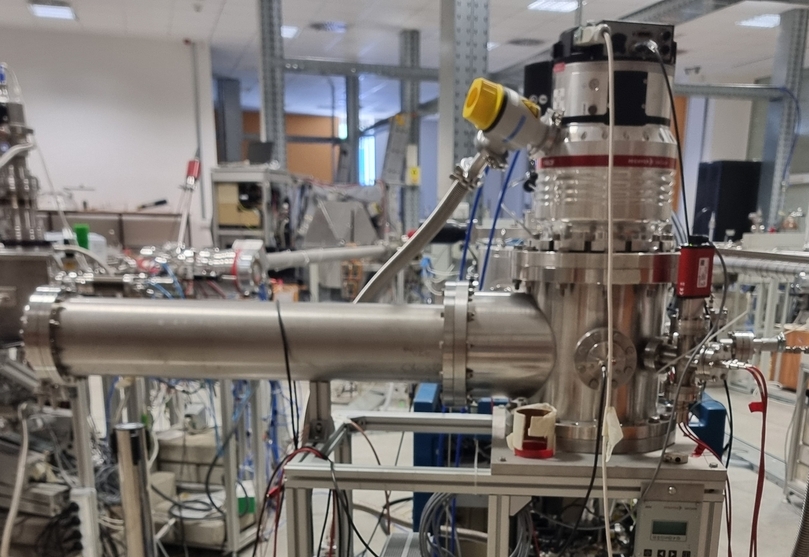
Ion source: 2 MV Tandetron, Energy 0.2 – 2 (Q+1) * MeV
TOFFEE Chamber: HV compatible, base pressure: 5×10⁻⁷ mbar
Vacuum system: 1000 l/s turbomolecular pump + scroll
Target: Specially designed gas jet
Detector: Custom made 4-segment fast MCP
Introduction of the TOFFEE setup
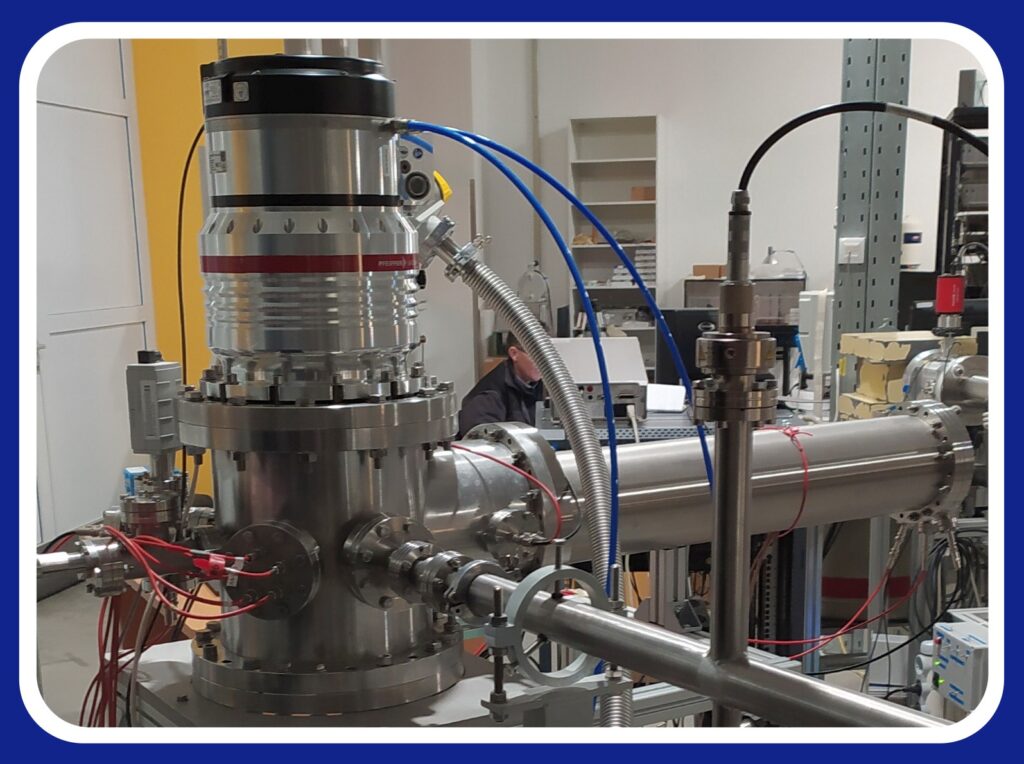
The setup includes a high-voltage (HV) compatible vacuum chamber, a gas dosing line equipped with a custom-designed nozzle, a drift tube featuring a unique electrostatic extractor system, and a microchannel plate (MCP) detector for ion detection. Singly charged projectile ions are generated using the tandetron accelerator at Atomki. This design enables detailed investigations into the fundamental processes of molecular fragmentation under ion impact, contributing valuable insights into the chemical dynamics of space environments.
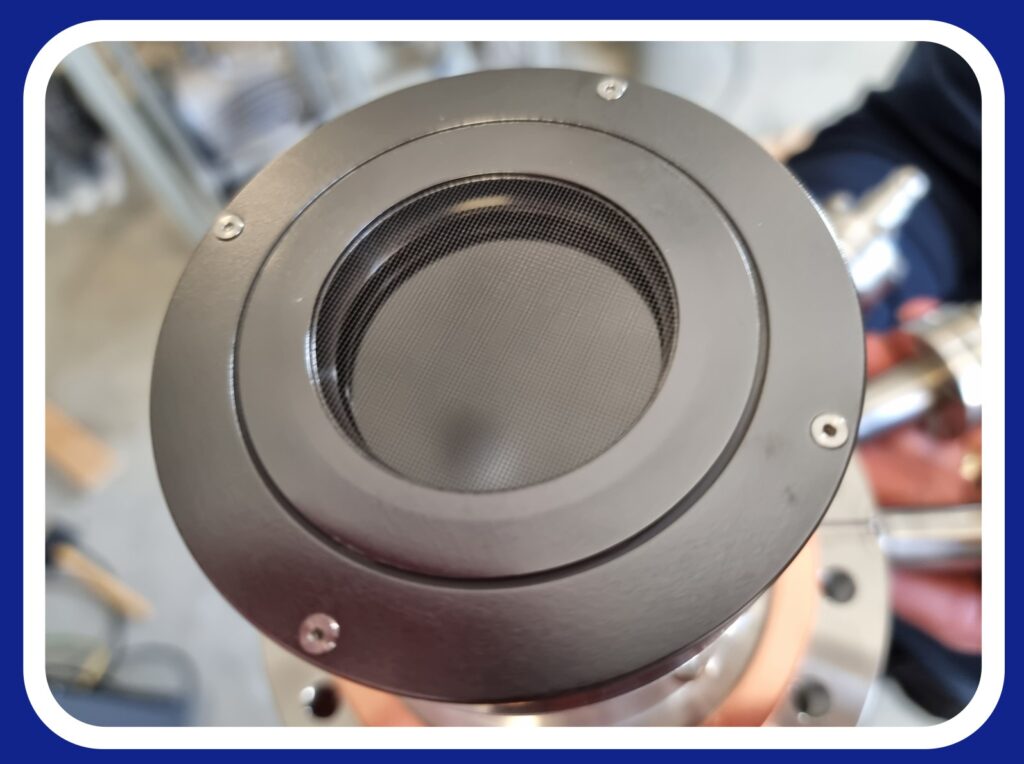
The electrode system of TOFFEE is optimized to efficiently extract all charged fragments from the collision region. The custom-designed four-segment fast MCP detector accurately measures the flight times of charged particles and provides approximate information about their impact positions. These features significantly enhance the precision and ease of determining absolute cross sections. The system operates in three distinct modes: the standard mass spectrometry mode, which enables precise mass analysis of ions; the energy-dispersive mode, which measures the energy distribution of ions; and a combined mode that integrates the functionalities of the first two modes with minor compromises.