ICE CHAMBER FOR ASTROPHYSICS / ASTROCHEMISTRY (ICA)
Background
The researchers of the Experimental Molecular Physics Researc Group of the HUN-REN Instutute for Nuclear Research (HUN-REN ATOMKI) started to develop their laboratory for studying astrophysically relevant charged particle impact molecular collisions in 2017. The effort resulted a developed new facility (Ice Chamber for Astrophysics/Astrochemistry, ICA) at one of the beamlines of the Tandetron Accelerator of the ATOMKI Accelerator Centre. The ATOMKI group joined to the consortium of a new European Infrastucture Network, which has been funded in 2020. From that time ICA became one of the most popular laboratory facilities in astrochemistry within the transnational access (TA) program of the EUROPLANET 2024 Research Infrastructure Project. The goal of the experimental apparatus is to systematically study space-relevant ices under different ion impact conditions so as to better understand the origin and evolution of the building blocks of life.
Key features of the ICA setup
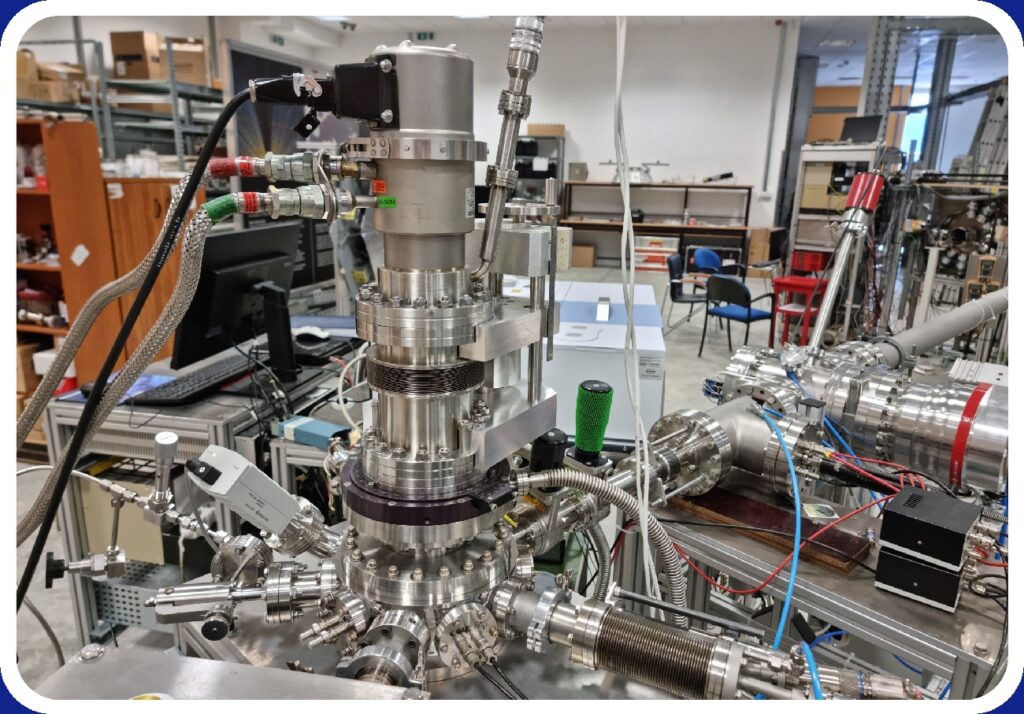
Ion source: 2 MV Tandetron, Energy 0.2 – 2 (Q+1) * MeV
ICA Chamber: UHV compatible, base pressure: 5×10⁻⁸ mbar
Cold head: Leybold 20 K, sample holder for 4 substrate (diameter – 15 mm), XY-plane rotary stage and z-axis translator
Sample deposition: Both direct and background
Infrared Spectrometer: FTIR Bruker v70 with FIR extension, Detectors – MCT & DLaTGS
QMS: Detector – FC and SEM, mass range 1-300 amu
Introduction of the ICA setup
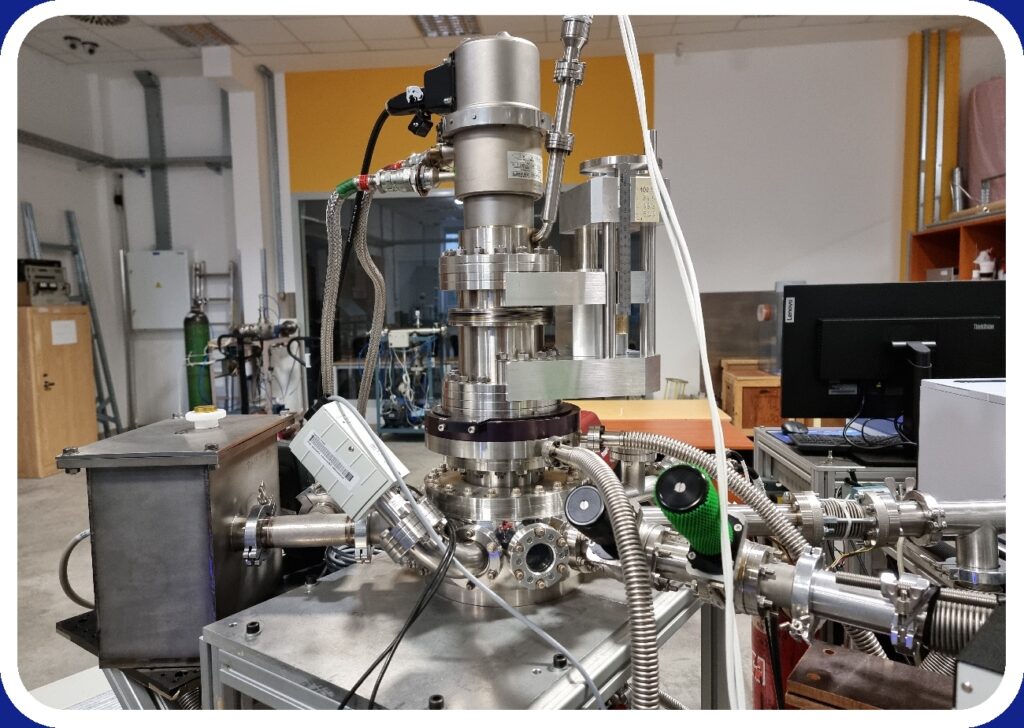
The UHV-compatible ICA stup is designed to investigate the effect of ion irradiation of analogues of interstellar and Solar System ices. Ions of different species and charge states from H+ to S2+ with energies from 0.2 to 4 MeV are produced by the Atomki Tandetron accelerator and may be used to simulate galactic cosmic rays and stellar winds.
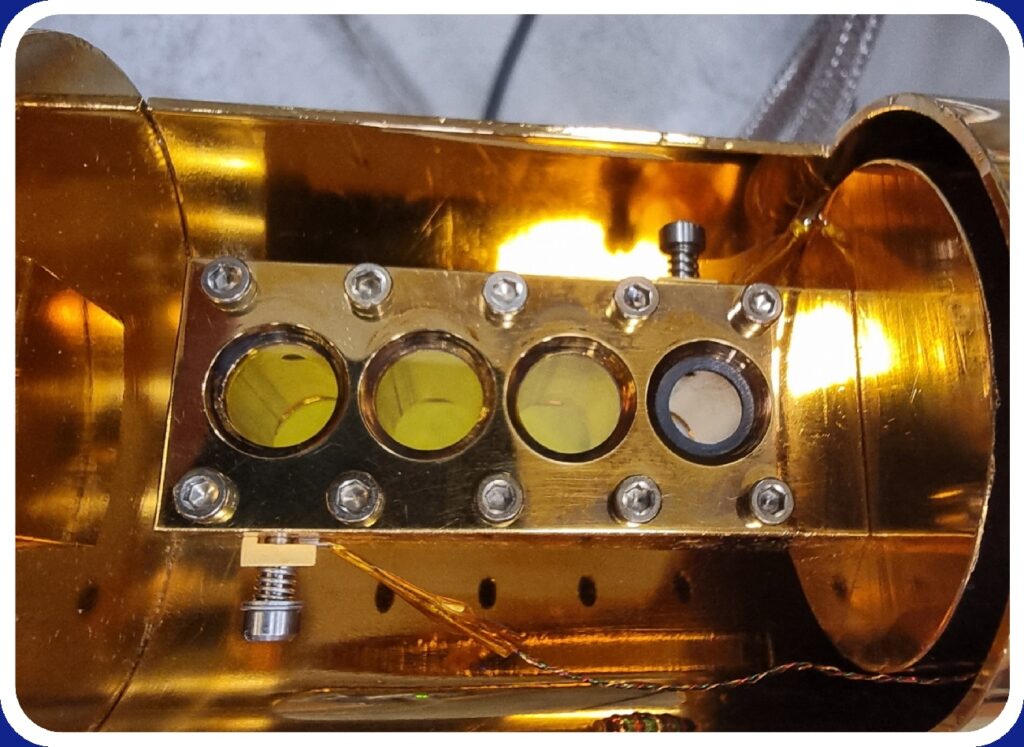
Analogues of interstellar and Solar System ices are deposited on a series of cold substrates. Three substrates are mounted vertically on a copper holder connected to a closed-cycle cryostat, and one slot is used as a diaphragm. The substrate holder can be rotated 360° around its rotational axis and actuated along the z-linear translation stage. A copper heat shield covered with a gold layer minimizes heat transfer, ensuring the stable, low temperature of the sample holder. The temperature of the substrates can be regulated between 20 and 300 K by a LakeShore cryogenic temperature controller. Both background and direct deposition are available for pure gases or gas mixtures and can be controlled to achieve the desired layer thickness.
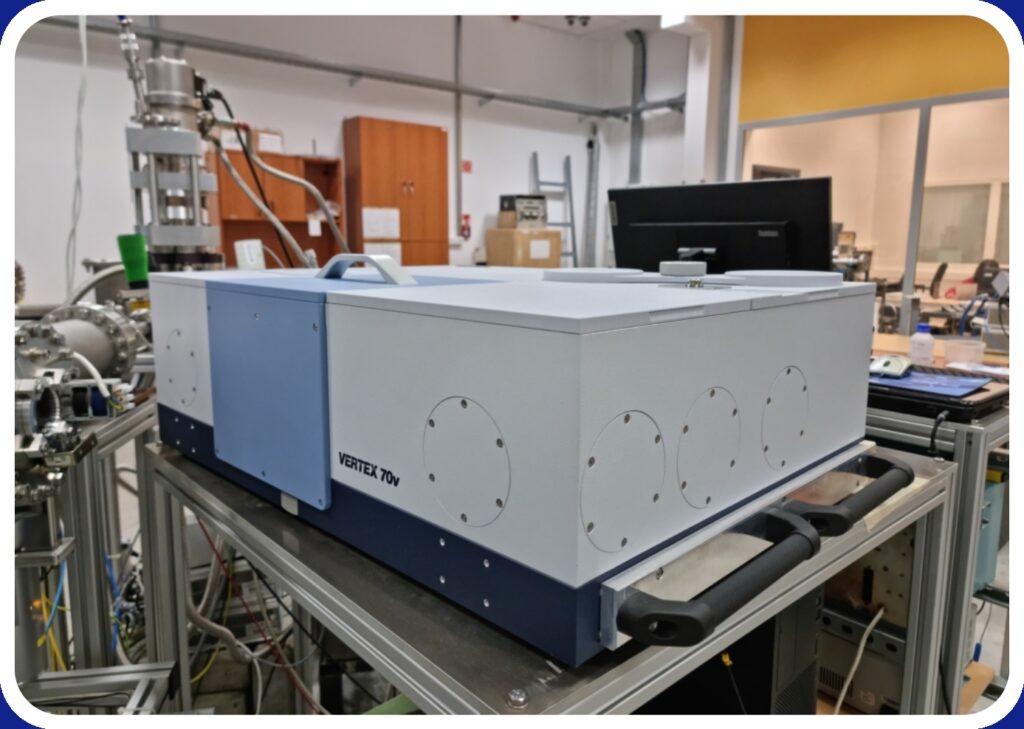
The resulting physicochemical changes in the ice layers due to irradiation are monitored by infrared spectroscopy in either transmission or reflection mode. Our Bruker Vertex 70V spectrometer is capable of performing both MIR and FIR measurements. Optionally, the setup can be equipped with a QMS spectrometer to analyze the sputtered fragments (mass range: 1–300 amu) ejected from the ice during ion irradiation. Temperature-programmed desorption (TPD) studies can also be conducted on both non-irradiated and irradiated ices to identify molecules desorbing from the ice layer.
If you would like to learn more about the ICA setup, please refer to the following publication: