HUN-REN ATOMKI
Space Chemistry Research Group
Networking
Embedded in the regional, European and wider networks of international space science collaboration, ATOMKI and its Space Chemistry Research Group is an active member of the Europlanet Society and leader of the Hungarian Space Chemistry Research Network. Following the declarations of European states for promoting space research, due to its scientific and technological benefits for the European economy, we are committed to play active role in this development by forming our ATOMKI laboratories a world-leading research facility, in close collaboration with our international partners.
Overview of research networks, which our institute is engaged in:
Europlanet Society

The Europlanet Society promotes the advancement of European planetary science and related fields for the benefit of the community and is open to individual and organisational members. Anyone with an active interest in planetary science (whether academic or industrial, professional or amateur) is welcome to join.
- Through its 10 Regional Hubs, Europlanet Society supports the development of a diverse and inclusive planetary science community across Europe.
- It enhances the sector’s visibility via engagement with stakeholders, including the public, media, policymakers, and industry.
- Strengthens Europe’s role in planetary science by building national and international collaborations.
Europlanet Society is the parent organisation of the Europlanet Science Congress (EPSC), Europe’s largest annual conference dedicated to planetary science.
It builds on two decades of Europlanet projects funded by the European Commission, ensuring a lasting legacy through infrastructure, transnational facility access, virtual services and tools, training, and other community resources.
Hungarian Space Chemistry Research Network
The aim of the Space Chemistry Research Network is to provide complex laboratory conditions for experimental modelling of processes taking place in outer space. Their devices ensure the precise monitoring of physical and chemical changes created by radiation in solid, ice and gas phase samples. They are used to examine both the natural processes in outer space and the conditions of human activity in space, including data provision for mission planning. Research activity of the network’s scientists in international cooperation covers the formation of chemical elements, the molecular synthesis in interstellar matter, and the formation mechanisms of the large organic molecules necessary for life. The network coordinator, ATOMKI is one of the most active participants in the Horizon2020 Europlanet 2024 infrastructure project. The rapidly developing network launches targeted programs to support the missions of space agencies, e.g., by studying the processes taking place on Jupiter’s icy moons.
COST Actions
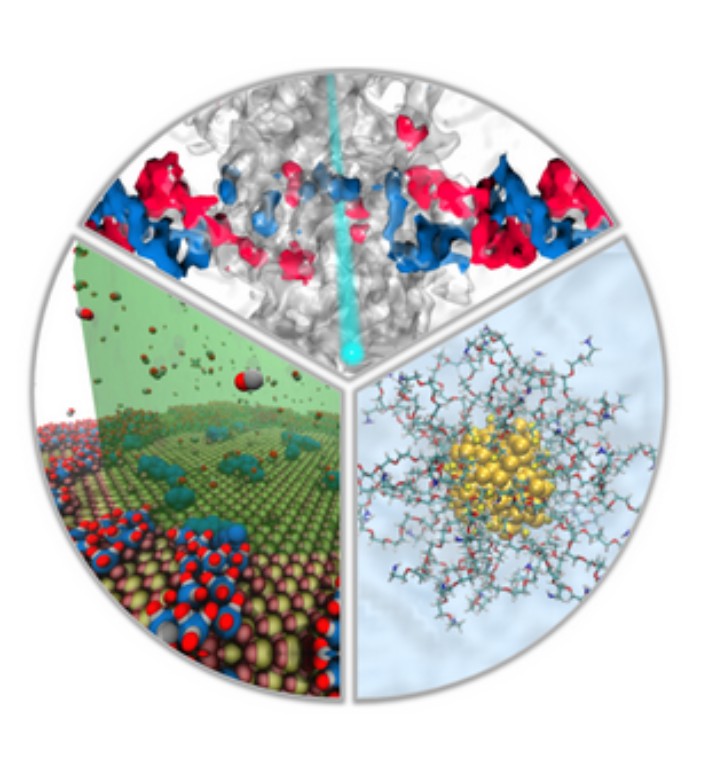
COST actions CA20129 “MultIChem.
COST actions CA22133 “PLANETS”